

Homeopathy that listens
to your story.
Solution-focused on complex cases — since 2008.
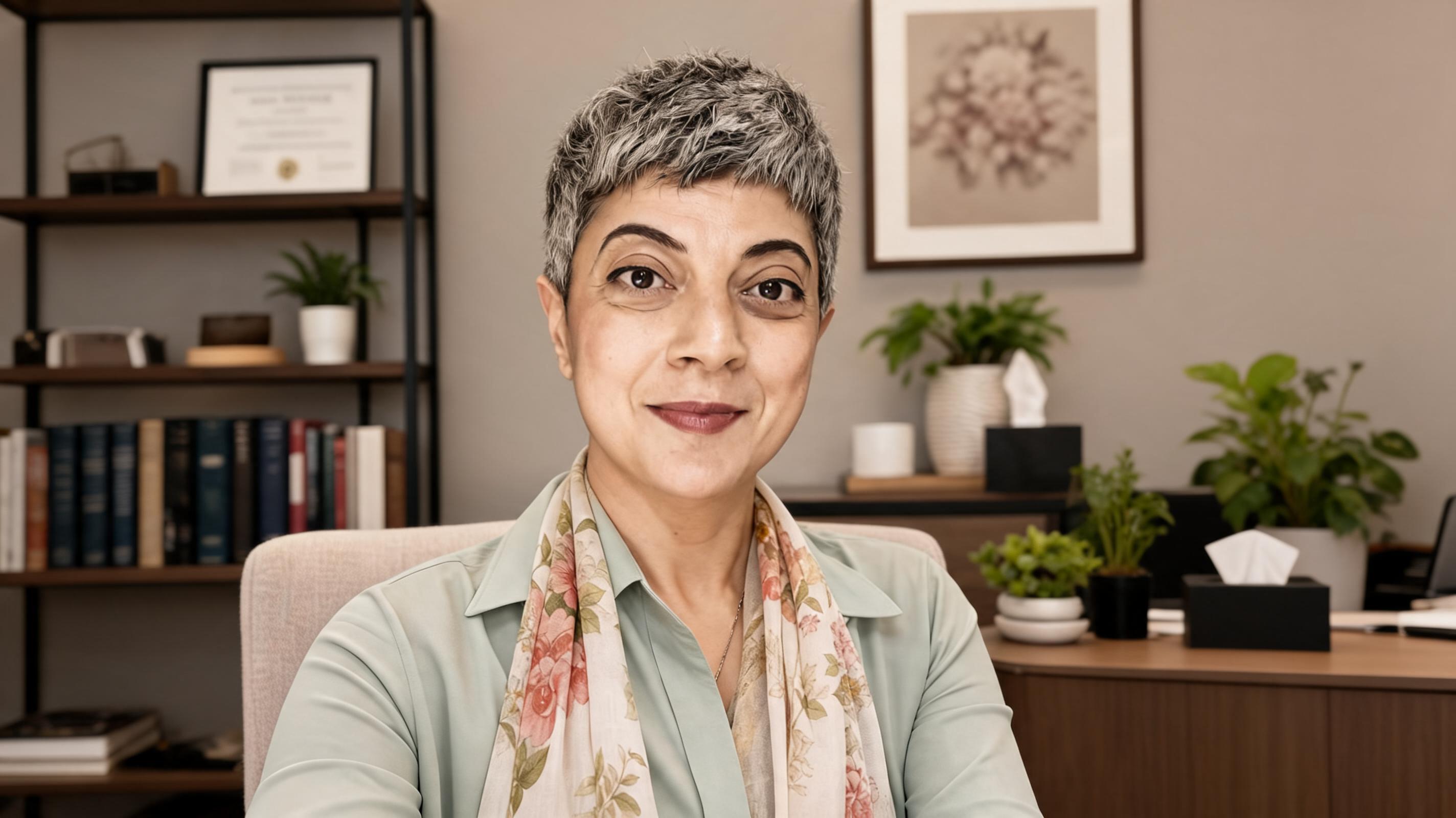
Hom. Hande Özçıkrıkçı (DiHom, MARH, CHE)

Who Am I?
Since 2008, I have worked mostly with complex cases and what we call multi-miasmatic chronic conditions. These are the difficult stories referred to me by colleagues, and the clients who fall outside the scope of healthy cases requiring a single remedy. That is why I moved beyond the classical homeopathic approach, towards Eizayaga's layer method, remedy maps, and a much deeper clinical perspective. I am so glad I did. Because in the end, I arrived back where I started: the Organon.
When I stepped into this profession in 2008, at just 26, homeopathy was a newly sprouting field in Turkey. At that age I could not have known how much labour, devotion and care the road would ask — and just as well I didn't. That thorny yet deeply transformative journey is still my greatest passion today.
Throughout my training I completed diploma education in three different countries, made clinical observations, and worked with many valuable teachers. While completing my first diploma, I took part, together with my colleagues, in founding the Turkish Homeopathy Association, where I would later serve as vice president. In 2018 I served as an educator at the Turkey branch of the Centre for Homeopathic Education. Today, in my own clinic in Scotland, I serve clients from Edinburgh and all over the world, and offer supervision and advanced trainings to homeopathy students and homeopaths.
This is the area of service where I build a system step by step for each client, and where my meticulous nature finds its place.
At the end of all this journey, I arrived where everything began: Hahnemann and the Organon. This is one of the things I am proudest of — the principles of homeopathy have barely changed in nearly three centuries. The world changed, diseases changed; but the principles Hahnemann set out centuries ago are still the compass of my work today. Few approaches in the world have roots this deep and this whole. I consider everyone who has encountered this approach — and myself — very fortunate.
And heartfelt thanks to the thousands of clients who have trusted me on this road.
In 1790, the German physician Samuel Hahnemann reads in a medical book he is translating that the cinchona plant helps against malaria because it is bitter — but this does not satisfy him; he decides to test the plant on himself. Taking it regularly, he observes malaria-like symptoms appearing in his healthy body. So the plant helps against malaria not because it is bitter, but because it can produce symptoms similar to malaria. From this observation is born the principle that has not changed in the two centuries of the homeopathic tradition: like cures like. Whatever picture a substance creates in a healthy person, it has the power to address a similar symptom picture in someone who is unwell.
For eighteen years my practice has rested on exactly this source: I work faithful to Hahnemann's Organon, searching for the simillimum of the moment, observing meticulously between sessions. I strive for a practice true to its source, away from dogmatic single-remedy approaches and vague spiritual interpretations. Because the language of the body and the homeopath's sound observation do not lie.
Most of my clients come on another client's recommendation; the hardest cases arrive from colleagues saying "let Hande hear this story too." It is a responsibility I cherish. What I pass on to my students goes beyond knowledge: perspective, and the correct application of technique. I consider it a debt to hand down an understanding of homeopathy that is free of dogma and speculation, and in tune with the realities of our age.
The Anatomy of a Session
Unhurried
I ask you to tell your story in your own words — in a 90-minute session we translate your language into the language of homeopathy to reach the right remedy.
Physical Signs
"I used to feel cold, now I'm burning", "spicy food bothers my stomach now", "my head aches on one side only, and I wake at 3 a.m. every night"... We watch the vital force speak through the body — and the body does not lie.
Mental & Emotional Signs
Your temperament, your worries, your joys, your recurring patterns — without allowing speculation, we talk through the emotional states and predispositions that form the ground of your complaints.
What your family's story brings
Tendencies passed down through generations and your family's health patterns are part of the story too — in homeopathic understanding this is called the 'miasm'.
Training & Supervision
Advanced, case- and practice-based training, plus individual and group supervision, for practising homeopaths and students.
Acute Homeopathy Training·Miasms & Miasmatic Remedies·Organopathy in Complex Cases·Remedy Maps
Training dates will be announced on 15 October.
What is homeopathy? — the law of similars and the "artificial disease"
Read →Which Conditions Is Homeopathy For?
The criterion here is not the name of the disease, but the patient's vital force.
Read →Is a Healing Crisis Necessary?
It is neither necessary, nor ideal, nor an effect to romanticise.
Read →The Constitutional Remedy Myth — Is It Real?
A myth built on the illusion of a "soulmate remedy" that helps every complaint and never changes through life.
Read →Remedy Maps
The world changed, but the consistency of homeopathic knowledge did not.
Read →Do Remedies Have a Gender?
Three remedies attributed to men — and overlooked in women.
Read →“Illness keeps us from comfort; discomfort keeps us from freedom.”